
How to Calculate TDEE – Step-by-Step Guide to Daily Calorie Needs
Understanding how to calculate TDEE is one of the most practical and empowering steps anyone can take toward sustainable weight management, athletic performance, or improved overall health. TDEE — Total Daily Energy Expenditure — answers a simple but powerful question: how many calories does your body use in a typical day? Knowing how to calculate TDEE correctly allows you to set realistic targets for losing fat, gaining muscle, or maintaining weight, and it informs smarter food choices, training plans, and public health programs.
This comprehensive guide explains, step by step, how to calculate TDEE, the scientific history behind the metrics, practical examples, common pitfalls, program implementation (from individual plans to state-level nutrition initiatives), comparisons with other approaches, and future directions. Throughout, you’ll find a blend of evidence-based formulas, real-world application advice, and thoughtful context on how TDEE connects to broader health and social objectives — from community nutrition schemes to women empowerment programs.
What is TDEE and why it matters
TDEE stands for Total Daily Energy Expenditure. It represents the total number of calories your body burns over a 24-hour period and includes energy used for basic physiological processes, daily activities, and exercise. Understanding how to calculate TDEE is essential because calories are the currency of energy balance: consume more than your TDEE and you’ll gain weight; consume less and you’ll lose weight. For athletes, precise knowledge of TDEE helps optimize performance and recovery. For public health planners, aggregated TDEE data can inform nutritional policies and social welfare initiatives.
Total Daily Energy Expenditure is comprised of several components: Basal Metabolic Rate (BMR), the thermic effect of food (TEF), energy expended during physical activity, and non-exercise activity thermogenesis (NEAT). Learning how to calculate TDEE requires estimating each of these components accurately and combining them into a final daily calorie target.
The science and history behind TDEE
The concept of energy expenditure in humans grew out of 19th- and 20th-century metabolic research. Early physiologists measured basal metabolic rates and sought to quantify the heat and oxygen consumption associated with life itself. Over time, researchers developed formulas that estimate basal metabolism based on easily measured variables like age, sex, height, and weight.
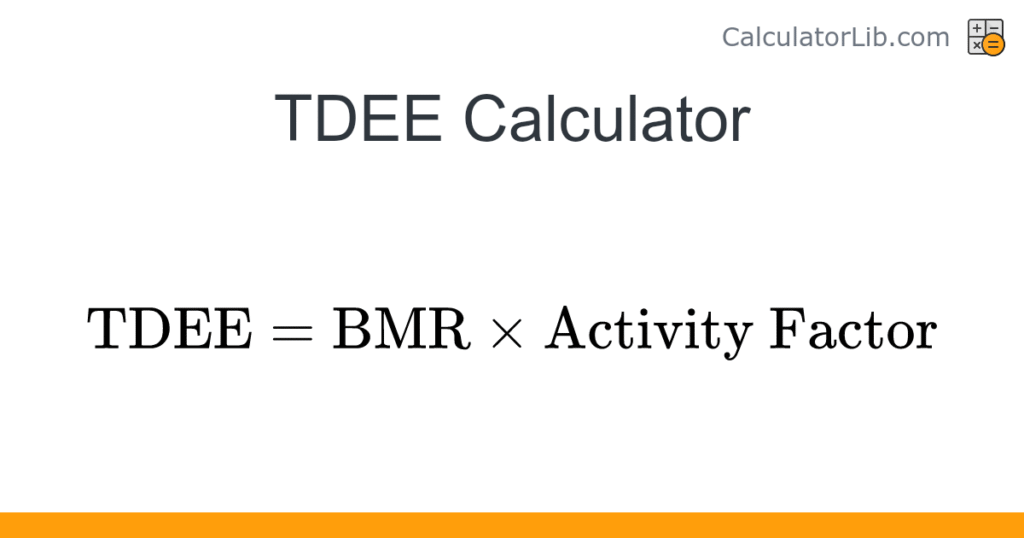
Classic equations such as the Harris–Benedict equation, developed in the early 1900s and later revised, and the Mifflin–St Jeor equation, introduced in the 1990s, are cornerstone tools for those who want to know how to calculate TDEE. These formulas estimate BMR, which is then multiplied by an activity factor that captures lifestyle and exercise intensity to arrive at TDEE. The scientific evolution of these formulas reflects improvements in our understanding of metabolic physiology and the desire to make calculations accessible outside the lab.
Core components: BMR, TEF, NEAT, and Activity
To learn how to calculate TDEE, you must first understand its building blocks.
Basal Metabolic Rate (BMR) — BMR is the energy required for essential physiological functions at rest: heartbeat, breathing, cellular maintenance, and basic brain activity. BMR is typically the largest single component of TDEE.
Thermic Effect of Food (TEF) — TEF is the energy required for digestion, absorption, and storage of nutrients. It generally accounts for about 5–10% of daily energy expenditure and varies slightly by macronutrient composition.
Non-Exercise Activity Thermogenesis (NEAT) — NEAT includes low-intensity activities of daily living: fidgeting, standing, walking for errands, and household chores. NEAT can vary widely between individuals and plays a significant role in why people with similar diets and exercise routines can experience different outcomes.
Exercise Activity — This includes planned workouts and sports. The caloric cost depends on intensity, duration, and type of activity.
When you combine BMR + TEF + NEAT + Exercise, you have your TDEE. Knowing how to calculate TDEE means estimating each component credibly and summing them.
Popular formulas: How to calculate TDEE step-by-step
Several well-validated approaches exist for how to calculate TDEE. The process generally follows these steps:
- Estimate your Basal Metabolic Rate (BMR) using a validated equation.
- Choose an activity multiplier that reflects your daily movement and structured exercise.
- Multiply the BMR by the activity factor to arrive at TDEE.
- Adjust for special circumstances: pregnancy, illness, athletic phases, or metabolic adaptations.
Below are the most commonly used formulas and examples showing how to calculate TDEE.
Mifflin–St Jeor equation (recommended for many adults)
The Mifflin–St Jeor equation is widely recommended because it balances accuracy and simplicity.
For men:
BMR = (10 × weight in kg) + (6.25 × height in cm) − (5 × age in years) + 5
For women:
BMR = (10 × weight in kg) + (6.25 × height in cm) − (5 × age in years) − 161
After calculating BMR, multiply by an activity factor:
- Sedentary (little or no exercise): × 1.2
- Lightly active (light exercise/sports 1–3 days/week): × 1.375
- Moderately active (moderate exercise 3–5 days/week): × 1.55
- Very active (hard exercise 6–7 days/week): × 1.725
- Extra active (very hard physical job or training twice per day): × 1.9
Example: A 35-year-old woman, 165 cm, 68 kg, moderately active.
BMR = (10×68) + (6.25×165) − (5×35) − 161 = 680 + 1031.25 − 175 − 161 = 1375.25 kcal
TDEE = 1375.25 × 1.55 ≈ 2131 kcal
This shows precisely how to calculate TDEE for an everyday person.
Harris–Benedict equation (classic)
The revised Harris–Benedict equation is older but still used. It tends to slightly overestimate BMR compared to Mifflin–St Jeor.
For men:
BMR = 88.362 + (13.397 × weight in kg) + (4.799 × height in cm) − (5.677 × age)
For women:
BMR = 447.593 + (9.247 × weight in kg) + (3.098 × height in cm) − (4.330 × age)
Multiply BMR by the same activity factors used for Mifflin–St Jeor to compute TDEE.
Katch-McArdle equation (lean mass–based)
If you know your body fat percentage, Katch-McArdle focuses on lean body mass:
BMR = 370 + (21.6 × lean body mass in kg)
This approach is useful for athletes or body composition–focused plans and is part of how to calculate TDEE more precisely when body composition data are available.
Activity multipliers and real-world estimation
One of the trickiest parts of how to calculate TDEE is selecting the right activity multiplier. Many people underestimate NEAT or overestimate workout intensity. Be realistic: if your job is desk-based but you train intensely for one hour, you might be lightly to moderately active, not very active.
An incremental approach works best: choose an initial multiplier, track weight and energy levels for 2–4 weeks, and adjust. If weight remains stable at your TDEE, you estimated well. If weight drifts, reassess food tracking accuracy, workout logs, or consider metabolic adaptation.
Practical examples: How to calculate TDEE for different goals
Understanding how to calculate TDEE also means applying it to your goals:
- Maintenance: Eat at TDEE.
- Weight loss: Create a daily caloric deficit (commonly 10–25% below TDEE, depending on how aggressive and sustainable you want the plan to be).
- Weight gain/muscle building: Add a surplus (commonly 10–15% above TDEE for lean gains).
Example 1 — Conservative fat loss:
TDEE = 2,200 kcal → Target = 2,200 − (10% of 2,200) = 1,980 kcal
Example 2 — Moderate muscle gain:
TDEE = 2,500 kcal → Target = 2,500 + (12% of 2,500) = 2,800 kcal
These examples demonstrate how to calculate TDEE and then adapt caloric intake to match goals while preserving macro balance and nutrient quality.
Tracking, measurement, and the role of wearables
Knowing how to calculate TDEE is only the first step — tracking and measurement are critical. Food logging, bodyweight records, and performance metrics help validate your TDEE estimate. Wearables measure heart rate and activity to approximate energy expenditure, but they vary in accuracy. Use wearable data as a trend indicator rather than an absolute calorie meter. Combine device outputs with weight trends and subjective indicators (hunger, sleep, training recovery) to refine your calculation.
Common errors and pitfalls
When learning how to calculate TDEE, people often make the following mistakes:
- Overestimating activity level: The “I worked out today, so I can eat a lot” fallacy leads to chronic overeating.
- Underestimating portion sizes: Food labels and serving size misjudgments skew calculations.
- Ignoring NEAT variability: Two people with similar BMRs can have TDEEs that differ by hundreds of calories due to NEAT.
- Not revising over time: As you lose weight or gain muscle, your BMR changes. Periodically recalculate how to calculate TDEE to stay accurate.
- Relying solely on formulas: Formulas are estimates. Real-world observation and adjustment are essential.
How to calculate TDEE for special populations
Certain groups require tailored approaches:
Older adults: BMR declines with age due to reduced lean mass; use age-appropriate equations and consider conservative activity multipliers.
Pregnant or lactating people: Energy needs increase; consult health professionals to determine appropriate additional energy allowances rather than using generic TDEE multipliers.
Athletes and competitive trainees: Use lean mass–based estimates and measure energy flux; ensure adequate calories for training and recovery.
Clinical populations: Illness, metabolic disorders, and medications affect BMR and TDEE. Clinical professionals often use indirect calorimetry for precision.
Implementation at scale: public health, policy framework, and regional impact
Understanding how to calculate TDEE has relevance beyond individual lifestyle planning. Governments and NGOs use aggregated energy expenditure data to design nutrition programs, school feeding schemes, and social welfare initiatives. When planning food aid, knowing average TDEE by age group, sex, and region helps set calorie allocation and dietary composition.
For example, integrating TDEE calculations into a regional policy framework can improve the effectiveness of state-wise benefits for vulnerable populations. Programs aimed at women empowerment schemes and rural development benefit when nutrition interventions are tailored to the actual caloric needs of women, children, and agricultural laborers. This is how scientific metrics like TDEE translate into practical, measurable benefits at the community and state levels.
State-level impact and success stories
Several health programs worldwide have leveraged energy expenditure estimates to design school lunch programs, maternal nutrition initiatives, and emergency food distribution. By using localized data to modify national guidelines — accounting for regional activity patterns, climate-related caloric needs, and cultural diets — planners can optimize the nutritional impact.
Success stories often involve multi-sector collaboration: when local governments pair agricultural programs with nutrition education and active lifestyle initiatives, the result can be improved body composition, reduced micronutrient deficiencies, and better productivity. These case studies underscore the importance of knowing how to calculate TDEE in context, rather than applying a one-size-fits-all approach.
How to calculate TDEE in resource-limited settings
In rural development contexts or areas with limited infrastructure, simplified but robust methods are essential. Community health workers can use basic measurements (height, weight, age) and validated equations to estimate average TDEE for different population segments. These estimates can then inform caloric provisions in social welfare initiatives, ensuring food aid matches local energy needs without waste.
This approach also connects to women empowerment schemes: targeted nutritional support that takes into account women’s daily workloads and activity levels is more effective than generic food rations. Knowing how to calculate TDEE with simple tools can therefore lead to equitable program design and better health outcomes.
Measuring success: monitoring and evaluation
When TDEE-based strategies are part of a broader program, success metrics include changes in bodyweight, body composition, functional capacity, school attendance for children, and maternal health indicators. Monitoring systems that combine individual tracking with population-level surveys allow policymakers to determine whether interventions are meeting objectives and to recalibrate the underlying assumptions about how to calculate TDEE in their context.
Challenges in practice
Despite its utility, applying TDEE has challenges:
- Individual variability: Genetics, microbiome composition, and thermoregulatory differences mean two people with identical metrics may have different TDEEs.
- Data gaps: Many regions lack high-quality, population-specific metabolic data.
- Behavioral factors: Eating behaviors, social norms, and food access influence whether a calculated TDEE translates into real dietary changes.
- Resource constraints: Implementing measurement programs (like indirect calorimetry) is expensive.
- Policy misalignment: Nutrition policy may focus on calories alone, while TDEE-informed planning must consider macronutrient balance, food quality, and cultural acceptability.
These obstacles highlight why a comprehensive approach — not just knowing how to calculate TDEE but also how to translate it into practical, culturally appropriate interventions — is essential.
Comparing TDEE methods with alternatives
How to calculate TDEE differs from other approaches:
Calorie counting vs. TDEE-based planning: Simple calorie counting without a TDEE baseline is guesswork. Calculating TDEE gives a target and context.
BMR estimates vs. indirect calorimetry: Formulas are practical but less precise than metabolic cart testing. For clinical or elite athlete settings, indirect calorimetry provides accurate resting metabolic rates.
Wearables vs. predictive models: Wearables offer continuous trend data but may misestimate absolute energy expenditure. Predictive models (equations) are transparent and reproducible; combining both often yields the best real-world results.
Body composition–based calculations (Katch-McArdle) vs. weight-based formulas: If you have accurate body fat data, lean mass–based methods are more precise and helpful for body recomposition goals.
Understanding how to calculate TDEE requires knowing when each method is appropriate and the trade-offs in accuracy, cost, and feasibility.
Practical nutrition and training recommendations after calculating TDEE
Once you know how to calculate TDEE and have a target:
- Prioritize protein: Aim for a protein intake that supports muscle maintenance (commonly 1.6–2.4 g/kg of bodyweight for active individuals).
- Balance carbohydrates and fats according to energy needs, satiety, and training demands.
- Distribute calories across meals to support training performance and recovery.
- Reassess every 4–8 weeks: As weight changes, recalibrate how to calculate TDEE to maintain accuracy.
- Use progressive adjustments: Small, sustainable caloric changes are usually more effective long-term than aggressive swings.
These recommendations help translate TDEE numbers into practical plans.
Tools and calculators
There are many online calculators that automate how to calculate TDEE, but be discerning: ensure the tool uses a validated equation and allows you to specify activity levels and body composition if needed. Spreadsheet templates also work well for those who prefer control and transparency.
Future prospects: personalization, AI, and nutrition policy
The future of knowing how to calculate TDEE lies in personalization. Advances in wearable sensors, continuous glucose monitors, metabolomics, and AI promise to refine TDEE estimates by incorporating real-time physiology and behavioral data. Machine learning models can integrate sleep quality, stress markers, and daily movement to produce dynamic TDEE values rather than static estimates.
On a policy level, integrating TDEE-aware planning into state-level benefits, school nutrition, and social welfare initiatives could make programs more efficient and equitable. Policymakers could design interventions that account for the varying energy demands of different occupations, ages, and sexes — improving outcomes across women empowerment schemes, rural development programs, and broader social safety nets.
Success stories and case examples
Several community-level initiatives illustrate how energy-expenditure-informed planning can work:
- A regional school feeding program that used activity surveys to adjust meal energy density achieved better attendance and reduced thinness among children.
- A maternal nutrition initiative aligned extra caloric support with postpartum workloads, improving recovery and breastfeeding rates.
- A workforce health program in an agricultural district tailored midday meals to match field labor energy demands, boosting productivity and reducing illness-related absenteeism.
These real-world examples show how knowing how to calculate TDEE and applying that knowledge at the community level can have measurable benefits.
Ethical considerations and accessibility
Applying TDEE calculations must be done ethically. Nutrition interventions should never stigmatize body shapes or misuse data. Moreover, ensuring access to reliable tools and education on how to calculate TDEE is key for equity. Programs aimed at social welfare initiatives and regional development should include capacity building so communities can interpret and use TDEE data themselves.
Practical checklist: How to calculate TDEE and act on it
Follow these practical steps to implement TDEE insights:
- Measure: Accurately measure weight, height, and age; obtain body composition if possible.
- Calculate BMR using a validated equation (Mifflin–St Jeor is a good start).
- Choose an honest activity multiplier reflecting daily life and structured exercise.
- Multiply BMR by the activity factor to derive TDEE.
- Set goals: Maintenance, deficit for fat loss, or surplus for gain.
- Track progress and adjust every 2–8 weeks depending on rate of change.
- Apply nutritional quality standards (macronutrients, micronutrients) alongside calorie planning.
- For community programs, aggregate demographic data to inform policy framework and state-wise benefit planning.
This sequence clarifies both the calculation and the practical follow-through.
Final thoughts: why knowing how to calculate TDEE matters
Knowing how to calculate TDEE brings precision to diet, training, and public health programs. The metric connects physiology with practical action — from daily meal choices to state-level nutrition policy. Whether you’re an individual aiming to improve body composition, a coach optimizing an athlete’s program, or a policymaker designing a rural development lunch scheme, TDEE is a foundational tool for meaningful, measurable outcomes.