
Accurate TDEE Calculator – Calculate Your True Calorie Needs
An Accurate TDEE Calculator is one of the most practical tools available today for people who want to manage weight, plan nutrition, or design community health interventions. Total Daily Energy Expenditure (TDEE) is the total number of calories a person burns in a day, and having an Accurate TDEE Calculator transforms abstract metabolic numbers into actionable plans. This long-form article explores the history, objectives, implementation, regional and state-level impacts, success stories, challenges, comparisons, and future prospects of reliable TDEE estimation — framed so it’s useful for individuals, health practitioners, policymakers, and program designers who want data-driven nutrition and social welfare outcomes.
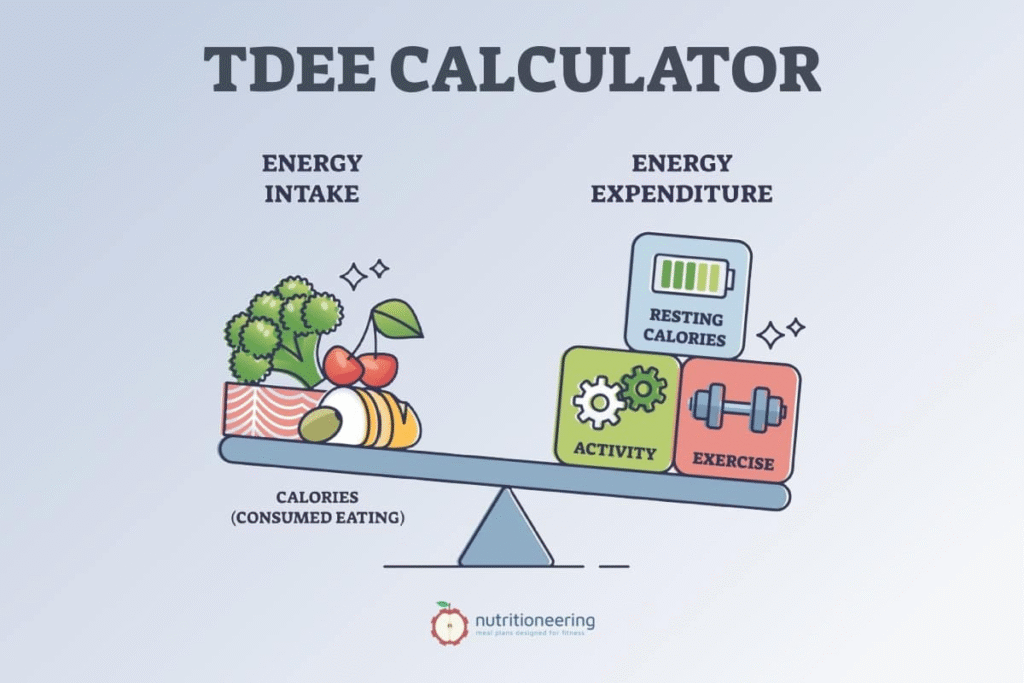
What is TDEE and why an Accurate TDEE Calculator matters
TDEE is the sum of basal metabolic rate (BMR), the thermic effect of food, non-exercise activity thermogenesis (NEAT), and energy expended during intentional exercise. A person’s daily calorie requirement determines whether they lose, maintain, or gain weight. An Accurate TDEE Calculator combines demographic inputs (age, sex), anthropometrics (height, weight), and activity patterns to provide a personalized estimate. Accuracy matters because small daily mismatches between intake and expenditure accumulate over time; a 100-calorie error per day produces a substantial weight change over months.
Public health programs, nutritional planning, and individual coaching all require dependable estimates. An Accurate TDEE Calculator becomes a cornerstone of interventions — from clinical weight management to community-level nutrition strategies — reducing guesswork and enabling measurable goals.
Why accuracy is different from precision
Accuracy implies closeness to the true caloric expenditure; precision implies repeatability. An Accurate TDEE Calculator aims for both, but especially accuracy, because even highly precise results are useless if they are systematically biased. Modern calculators improve accuracy by incorporating validated formulas, population-specific adjustments, and activity quantification, thereby helping practitioners and program managers target resources effectively.
Brief history: how TDEE estimation evolved
TDEE estimation evolved from laboratory metabolic research. Early calorimetry studies in the 19th and 20th centuries measured oxygen consumption to compute energy expenditure. Researchers developed basal metabolic rate equations (e.g., Harris-Benedict, Mifflin-St Jeor) which formed the foundation for TDEE estimates. Over decades, calculators transformed these equations into user-friendly tools.
The first widely adopted field tools were simple BMR-based calculators with activity multipliers. As wearable sensors, accelerometers, and large population studies became available, developers built more nuanced Accurate TDEE Calculator models that integrate objective activity data and population-level corrections. Today’s calculators can incorporate data from heart-rate monitors, smartphone motion sensors, and validated questionnaires to refine estimates.
Objectives of designing an Accurate TDEE Calculator
The primary objective of an Accurate TDEE Calculator is to provide a reliable daily energy estimate so users can set appropriate caloric targets for weight loss, maintenance, or gain. Secondary objectives include:
- Supporting clinical decisions for dieticians and physicians by supplying standardized metabolic estimates.
- Assisting public health programs in targeting nutritional support or evaluating energy needs in different population groups.
- Enabling state-level planners and NGOs to assess the energy requirements for community feeding programs, disaster relief, and maternal-child health schemes.
- Empowering women and marginalized groups through tailored nutrition guidance as part of women empowerment schemes and social welfare initiatives.
- Informing rural development programs that integrate nutrition with agriculture and livelihood interventions.
An Accurate TDEE Calculator therefore serves multiple stakeholders: individuals, clinicians, policymakers, and implementers in regional and state policy frameworks.
Core methodology: how an Accurate TDEE Calculator works
An Accurate TDEE Calculator synthesizes multiple components:
- Basal Metabolic Rate (BMR): Derived from validated equations such as Mifflin-St Jeor, Harris-Benedict, or Cunningham (which uses lean body mass). The choice of equation influences accuracy across populations.
- Thermic Effect of Food (TEF): Typically estimated as a percentage (about 8–10%) of total energy intake. The calculator generally applies a standard TEF adjustment or allows user input for macronutrient composition.
- Activity Energy Expenditure (AEE): This is the most variable component and the main source of estimation error. An accurate system combines self-reported activity with objective data (step counts, heart rate) or validated activity multipliers calibrated to local lifestyles.
- Non-Exercise Activity Thermogenesis (NEAT): NEAT captures everyday movements; good calculators include separate fields or inferred estimates for sedentary, light, moderate, and very active occupations or lifestyles.
A modern Accurate TDEE Calculator uses these inputs and may include population-level correction factors (age-specific, sex-specific, ethnic adjustments) and transparent uncertainty ranges to present an estimated caloric window rather than a single absolute number.
Selecting the right formula: BMR choices and implications
The choice of BMR formula is crucial for an Accurate TDEE Calculator. Older equations like Harris-Benedict are easy to use but may overestimate needs in modern sedentary populations. Mifflin-St Jeor has demonstrated better performance across diverse adult groups. Cunningham is preferred when lean body mass is measured, particularly in athletes.
Designers of an Accurate TDEE Calculator should include options or automatic selection logic to pick the most appropriate baseline equation. For clinical contexts and state-level nutrition programs, the tool should document which formula was used to ensure transparency and reproducibility.
Implementation: Integrating an Accurate TDEE Calculator into programs
Deploying an Accurate TDEE Calculator within a program requires careful planning. Implementation steps include stakeholder engagement, localization, training, and data governance. When integrated into maternal health schemes or social welfare initiatives, the tool must be culturally adapted: activity categories should reflect local occupations and lifestyles, and language and metrics must align with the target users.
For instance, in state-wise benefits or rural development projects, program teams can use an Accurate TDEE Calculator to estimate energy needs for supplementary feeding programs. It helps optimize procurements, reduce waste, and ensure vulnerable groups receive adequate caloric support.
Successful implementation depends on embedding the calculator within broader policy frameworks and monitoring systems. That means linking TDEE outputs to follow-up actions — such as counseling, food rations, or agricultural support — rather than using the calculator as a standalone gadget.
Regional and state-level impact: nutrition policy and planning
An Accurate TDEE Calculator becomes a strategic tool when scaled to regional and state levels. Policymakers can use aggregate TDEE estimates to:
- Design food distribution quantities for school feeding programs.
- Calculate budgetary needs for state-sponsored nutrition interventions.
- Assess caloric shortfalls in vulnerable populations and prioritize resource allocation.
- Inform cross-sector initiatives where nutrition intersects with women empowerment schemes and rural development programs.
When states adopt an Accurate TDEE Calculator approach, they can better synchronize agricultural policy with nutritional goals: for example, ensuring staple and micronutrient-rich crops are prioritized in regions where caloric deficits are identified.
Case example (hypothetical): State-level planning with TDEE data
Imagine a state health department uses an Accurate TDEE Calculator across districts to estimate daily calorie needs for pregnant women and young children. The aggregated data reveal pockets of higher-than-expected deficits in certain rural blocks. The state then adjusts its food subsidy program and integrates women empowerment schemes that include kitchen gardens and nutrition education, directly responding to measurable energy gaps.
Success stories: where an Accurate TDEE Calculator made a difference
There are many instances — from clinical weight management to community nutrition — where an Accurate TDEE Calculator has had real impact. Certified dietitians report improved outcomes when clients use personalized energy targets derived from robust calculators. Community NGOs that paired an Accurate TDEE Calculator with on-the-ground counseling reduced undernutrition markers more rapidly than control groups that used standard ration sizes.
Success stories often share common features: accurate baseline measurement, consistent follow-up, culturally adapted guidance, and integration into broader interventions such as maternal support programs or rural development initiatives. The calculator is not a silver bullet but an enabler for targeted, measurable action.
Challenges and limitations
No tool is perfect. An Accurate TDEE Calculator faces several challenges:
- Self-reported activity bias: Many calculators depend on user-reported activity levels, which are subject to social desirability and recall errors.
- Population differences: Equations calibrated on one population may not translate perfectly to another due to genetic, environmental, or lifestyle differences.
- Measurement error in weight and height: Inaccurate anthropometrics lead to incorrect TDEE estimates, which is a practical issue in low-resource settings.
- Dynamic metabolism: Metabolic adaptation during weight loss or gain alters energy needs; an Accurate TDEE Calculator should allow periodic reassessment.
- Technology access: Advanced calculators that use wearables may exclude populations in rural areas unless low-tech alternatives are provided.
Addressing these limitations requires thoughtful design: include uncertainty ranges, provide guidance on measurement, and offer low-tech pathways for regions with limited sensor access. Integrating the calculator within a mass program requires training and quality assurance to minimize data and implementation errors.
Comparisons: Accurate TDEE Calculator vs. other energy estimation tools
How does an Accurate TDEE Calculator compare with other approaches? Broadly, we can distinguish three types of tools:
- Basic estimators: Single-formula calculators with a few inputs (height, weight, age, sex) and a simple activity multiplier. They are fast but can be inaccurate for individuals with atypical body composition or activity patterns.
- Questionnaire-based estimators: Incorporate validated activity questionnaires (e.g., IPAQ). These improve the AEE estimate but remain dependent on self-report.
- Sensor-enhanced calculators: Combine heart rate and accelerometer data for dynamic, personalized estimates. These can be highly accurate for many users but require hardware and connectivity.
An Accurate TDEE Calculator that aims to be broadly useful should offer a tiered approach: a basic quick estimate for casual users, a questionnaire-augmented path for program use, and a sensor-enabled option for clinical or athlete contexts. This flexibility ensures inclusivity while maximizing accuracy where feasible.
Best practices for using an Accurate TDEE Calculator
To get the most from an Accurate TDEE Calculator, follow several principles:
- Measure height and weight accurately, using calibrated scales and stadiometers where possible.
- Reassess regularly, especially during weight change, illness, or shifts in activity level.
- Prefer calculators that document the underlying formula and provide a confidence interval.
- Use the TDEE output to create sustainable behavior plans rather than extreme caloric deficits.
- Combine TDEE-based targets with macronutrient guidance, micronutrient considerations, and local food availability.
Program designers should train field staff on anthropometric measurement and culturally adapt activity descriptions. When integrating an Accurate TDEE Calculator into policy frameworks or state-level programs, ensure alignment with existing social welfare initiatives to produce scalable, equitable benefits.
Data privacy and governance considerations
Digital implementations of an Accurate TDEE Calculator, especially in public programs, must handle personal data responsibly. Policies should cover consent, data minimization, secure storage, and transparent use. When calculators feed into state-level dashboards for planning, data must be anonymized and aggregated for policy decisions to protect individual privacy.
Ethical deployment also means ensuring equitable access. Including low-tech alternatives and offering calculators in local languages supports participation from women and rural communities targeted by empowerment schemes and rural development projects.
Designing for accessibility and cultural relevance
An effective Accurate TDEE Calculator is not only mathematically sound but also accessible. Design choices include simple language, local units (kilograms/centimeters or pounds/inches), audio explanations for low-literacy users, and culturally relevant activity categories (e.g., farming labor, domestic chores, market walking). Such adaptations increase adoption rates among women and rural populations who may otherwise be left out of health technology solutions.
When calculators are embedded into women empowerment schemes, pairing the tool with group counseling and community outreach amplifies impact: data-driven individual targets become part of a supportive system that includes skill development and resource access.
Monitoring and evaluation: measuring impact
Implementers using an Accurate TDEE Calculator within programs must define clear outcomes. For clinical programs, outcomes may include weight change trajectories, metabolic markers, and adherence rates. For state-level nutrition initiatives, monitor indicators such as prevalence of undernutrition, school attendance (where feeding programs are implemented), and food security measures.
Robust monitoring includes periodic validation studies: comparing the calculator’s estimates with measured energy expenditure from sample subsets (using doubly labeled water or indirect calorimetry) to quantify bias and adjust models as needed. These validation loops are essential if the Accurate TDEE Calculator informs large-scale procurement and subsidy decisions.
Integration with other schemes: health, social welfare, and agriculture
The value of an Accurate TDEE Calculator multiplies when linked to other schemes. For example, state governments can link TDEE-based energy needs with agricultural extension services that promote nutrient-rich crops. Women empowerment schemes can incorporate caloric guidance into livelihood training, ensuring that increased incomes translate into improved household nutrition. Social welfare initiatives like cash transfer programs could use TDEE-informed benchmarks when designing per-person allocations in emergency food assistance.
Such cross-sector integration transforms TDEE estimates from individual metrics into actionable evidence for multi-dimensional policy planning.
Technology trends: wearables, AI, and personalization
Emerging technologies are reshaping what an Accurate TDEE Calculator can achieve. Wearables and smartphone sensors allow continuous activity monitoring, and machine learning models can infer activity types and intensity to refine estimates. AI-driven personalization can adapt estimations based on longitudinal user data, metabolic responses, and behavior patterns.
However, technology must be balanced with equity: advanced features should not create a two-tier system where only urban, connected populations obtain the most accurate estimates. A responsible approach is to tier services, offering free, validated basic calculators and enhanced, opt-in sensor-enabled options for those who choose them.
Future prospects and research directions
The future of the Accurate TDEE Calculator embraces better validation across diverse populations, integration into public health surveillance, and embedding into life-cycle nutrition policies. Research priorities include:
- Large-scale validation studies in underrepresented demographics (e.g., older adults, pregnant women, ethnic minorities).
- Methods to estimate NEAT more accurately in rural and informal-economy contexts.
- Integration of TDEE outputs into supply chain and procurement models for state-level food distribution.
- Behavioral economics research to translate caloric targets into sustainable dietary and activity changes.
As models improve and data grow, the Accurate TDEE Calculator will become more than a personal tool; it will be a data point for evidence-based policy, contributing to healthier populations and more efficient social programs.
Practical guide: using an Accurate TDEE Calculator step-by-step
For an individual or program manager using an Accurate TDEE Calculator, the pragmatic steps are straightforward:
- Collect accurate measurements: weight, height, age, sex, and, if available, body composition.
- Characterize activity: use local activity descriptions or sensor data rather than generic labels when possible.
- Select the appropriate formula: choose Mifflin-St Jeor for general adults, Cunningham if lean mass is known, and adjust for pregnancy or illness.
- Interpret the estimate as a range: an Accurate TDEE Calculator should yield a caloric window rather than a single rigid number.
- Design actions based on targets: combine caloric targets with macronutrient balance and practical meal planning.
- Monitor and adjust: reassess every 2–4 weeks or after major changes in weight or activity.
Following these steps ensures that an Accurate TDEE Calculator is used responsibly and effectively, both for individual goals and within larger programmatic contexts.
Comparisons with other nutrition tools and schemes
When placed alongside other nutrition tools, an Accurate TDEE Calculator has a distinct role: it quantifies energy needs, while other tools (e.g., anthropometric screening, dietary diversity indices) evaluate nutritional outcomes or diet quality. Combining TDEE estimates with dietary assessments enables a fuller picture: energy adequacy and nutrient sufficiency together inform interventions.
Compared with blanket schemes that provide uniform rations, TDEE-informed approaches allow targeted, need-based allocations, increasing program efficiency. For example, food subsidies with TDEE adjustments can provide higher caloric support to labor-intensive households while preventing over-provision in low-need contexts. Such alignment enhances both fiscal responsibility and nutritional outcomes.
Practical considerations for program budgets and procurement
Using aggregated outputs from an Accurate TDEE Calculator, planners can forecast food requirements more precisely. This reduces wastage and improves cost-effectiveness. Procurement teams can plan quantities by demographic groups, anticipate seasonal shifts in activity patterns (affecting caloric needs), and coordinate supply chains accordingly.
Incorporating TDEE data into budgeting requires capacity building: staff must understand the assumptions behind the estimates and how to adapt them. Transparent documentation — stating which calculation method was used and when — is critical for accountability and policy evaluation.
Training and capacity building
Successful deployment of an Accurate TDEE Calculator relies on training. Health workers and program managers need instruction on measurement techniques, data entry, interpretation of uncertainty, and counseling strategies aligned with local diets. Training should emphasize culturally appropriate counseling, incorporating local foods and culinary practices to make nutrition advice realistic and adoptable.
Capacity building also includes teaching policymakers how to interpret aggregated TDEE results and craft responsive policies — for instance, understanding how caloric needs vary by season for agricultural workers and planning interventions accordingly.
Sustainability and long-term maintenance
For an Accurate TDEE Calculator to remain useful, it requires ongoing maintenance. Periodic recalibration with new population data, software updates for digital tools, and feedback loops from field implementations keep estimates relevant. Embedding maintenance responsibilities in organizational structures — whether within health departments, NGOs, or private providers — ensures sustainability.
Long-term success also depends on integrating TDEE use into routine practice rather than treating it as a pilot novelty. When the calculator becomes part of standard counseling protocols, school health programs, or welfare planning cycles, its value compounds over time.
Frequently Asked Questions
Conclusion
An Accurate TDEE Calculator is more than a mathematical instrument: it is a bridge between individual health goals and population-level policy. When designed, validated, and implemented thoughtfully, it guides effective nutrition counseling, sharpens program planning, and supports integrated schemes — from women empowerment initiatives to rural development and social welfare programs. The future of nutrition policy is data-driven, and an Accurate TDEE Calculator is a foundational tool in that transition.