
The Legion TDEE Calculator – Find Your Daily Calorie Burn
The Legion TDEE Calculator is a modern, evidence-based tool designed to estimate an individual’s Total Daily Energy Expenditure with clarity and precision. Built on peer-reviewed metabolic equations and practical adjustments for activity, the Legion TDEE Calculator aims to bridge scientific accuracy with everyday usability for athletes, coaches, nutritionists, and anyone serious about tracking energy balance. This introduction outlines the core promise of the Legion TDEE Calculator: reliable estimates that inform sensible, sustainable dietary and training decisions.
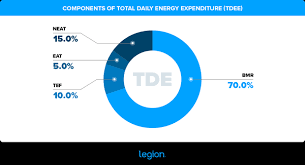
Understanding the origin and scientific basis of the Legion TDEE Calculator helps users appreciate why results differ from quick online guesses. Rather than relying on a single simplistic formula, the Legion TDEE Calculator synthesizes metabolic rate estimations with carefully tiered activity multipliers, offering a nuanced alternative to broad-brush calculators that ignore real-world variation. That methodological care is what gives users confidence when they plan caloric targeting for fat loss, muscle gain, or maintenance.
A common question is how the Legion TDEE Calculator compares to lab-based metabolic testing. While direct calorimetry or a metabolic cart provide gold-standard measures, the Legion TDEE Calculator is engineered to approximate those results using validated predictive equations, practical activity ladders, and adjustable factors for body composition—making it a powerful compromise between convenience and accuracy for everyday use.
Historically, estimates of daily energy expenditure evolved from simple rules of thumb to complex models, and the Legion TDEE Calculator represents a recent refinement in that trajectory. Traditional approaches offered quick calculations but frequently misled users by under- or over-estimating needs, while the Legion TDEE Calculator responds to that problem by incorporating user-specific inputs and updated resting metabolic rate equations that reflect modern research.
When considering the objectives behind the Legion TDEE Calculator, clarity and actionable insight are central. The tool’s goal is not only to provide a number but to translate that number into usable daily targets, macro-nutrient splits, and progress checkpoints. For coaches and practitioners, the Legion TDEE Calculator therefore becomes a planning instrument as much as an assessment device.
Implementation of any calculation tool depends on clear prompts and accessible interfaces; the Legion TDEE Calculator is designed with straightforward inputs—age, sex, height, weight, activity level, and optional body fat percentage—so users can generate estimates quickly without sacrificing depth. The interface supports iterative adjustments, allowing users to refine estimates as their activity or body composition changes.
At the state or regional level, tools like the Legion TDEE Calculator can be repurposed to inform public health programming and nutritional guidelines because energy expenditure affects population-level caloric needs and food security planning. Public health officials can leverage aggregated, anonymized Legion TDEE Calculator data to model dietary demand and design interventions with greater precision.
The policy framework around nutrition and health promotion benefits when evidence-based tools such as the Legion TDEE Calculator are used to design interventions. Policy-makers can use estimates from the Legion TDEE Calculator to set pragmatic energy targets for school meal programs, workplace wellness initiatives, or community nutrition schemes in ways that align with local activity patterns and demographic characteristics.
State-wise benefits of adopting standardized tools like the Legion TDEE Calculator include improved resource allocation and tailored messaging. Governments can better identify regions with higher physical activity demands or increased caloric needs and adjust support systems accordingly. The Legion TDEE Calculator can contribute to more equitable, data-driven food assistance and preventive health measures.
Women’s health and women empowerment schemes also gain when reliable energy-expenditure education is available. The Legion TDEE Calculator equips women with personalized information that supports balanced diets, maternal care planning, and targeted fitness programs, thereby contributing to broader empowerment by promoting health literacy and practical autonomy.
Rural development initiatives can incorporate localized data from tools such as the Legion TDEE Calculator to optimize nutrition programs that match labor patterns in agriculture and manual industries. By understanding energy needs driven by seasonal work or migration cycles, planners can use Legion TDEE Calculator-derived insights to tailor interventions that reduce undernutrition and improve workforce resilience.
Social welfare initiatives increasingly need precise, individualized approaches; adding a scientifically informed tool like the Legion TDEE Calculator to program toolkits allows social workers, nutritionists, and NGOs to prescribe energy and nutrition supports that reflect real-life activity and physiological differences rather than one-size-fits-all stipends or food baskets.
Delving into the science, the Calculator typically begins with an accurate resting metabolic rate (RMR) estimation and then layers on activity multipliers. The RMR estimation will often use modern formulas that consider age, sex, weight, and height, with optional adjustments for measured body fat percentage—making the Legion TDEE Calculator adaptable to both novice users and advanced athletes tracking lean mass.
A major advantage of the Legion TDEE Calculator is its transparency: users can see how each input affects the final estimate, and coaches can walk clients through the reasoning behind suggested calorie targets. This educational value helps users adopt sustainable habits rather than chasing arbitrary numbers, which is essential for long-term success in weight management.
Practical workflows integrated into the Calculator help translate numbers into plans. For example, after calculating TDEE, the tool can propose calorie deficits or surpluses, recommend macro ratios for protein, fat, and carbohydrates, and suggest sensible starting points for rate-of-change expectations—such as modest weekly weight changes that indicate realistic adherence.
Comparing the Legion TDEE Calculator with other popular calculators reveals important differences in methodology and outcomes. Some calculators rely solely on basal metabolic rate or generic activity multipliers, while the Legion TDEE Calculator emphasizes refined RMR equations and graduated activity bands, producing estimates that often align more closely with measured energy expenditure across diverse populations.
For athletes, the Calculator can be customized to accommodate training cycles. During intense training blocks, users can revise the activity input to reflect increased energy demands, and during deloads or recovery phases, the Legion TDEE Calculator helps reduce caloric targets conservatively to prevent overcompensation that undoes progress.
Coaches who work across demographics appreciate that the Legion TDEE Calculator supports nuanced adjustments for age-related metabolic shifts. As metabolic rate generally decreases with age, the Legion TDEE Calculator flags those trends and encourages proportionate nutrition and activity strategies rather than rigid calorie prescriptions that ignore life stage differences.
Nutrition professionals often pair the Legion TDEE Calculator with dietary recall and body-composition measures to validate and refine estimates. When measured intake and weight change betray a mismatch with predicted outcomes, the TDEE Calculator’s inputs can be revisited, revealing whether activity assumptions or body composition figures need correction.
One of the most practical features available in some implementations of the Legion TDEE Calculator is the option to enter measured body-fat percentage. That feature allows conversion from total weight to lean body mass, which some advanced RMR equations handle more precisely, thereby improving the Legion TDEE Calculator’s relevance for individuals with atypical body-composition profiles.
User education is central to the Legion TDEE Calculator’s mission: simply presenting a calorie number without context leads to confusion. That’s why explanations of metabolic adaptation, the thermic effect of food, and non-exercise activity thermogenesis are commonly integrated alongside the Legion TDEE Calculator’s outputs to equip users for informed choices.
Case studies demonstrate the TDEE Calculator’s utility: a competitive lifter adjusting macros for a cutting phase, a busy parent using the Calculator to navigate gradual fat loss while preserving muscle, or a regional public-health program modeling caloric adequacy across occupations—each highlights a different, practical application of the tool.
Implementation challenges for the Legion TDEE Calculator often revolve around input accuracy. Self-reported activity levels and body metrics can introduce error, so practitioners using the Legion TDEE Calculator are advised to corroborate inputs with objective measures where possible, such as activity trackers or calibrated body-composition assessments.
Success stories involving the Legion TDEE Calculator usually combine data-driven estimates with disciplined tracking. For users who log food consistently and monitor weight trajectory, the Legion TDEE Calculator becomes a dynamic guide: adjustments can be made in response to observed trends, producing steady, sustainable results rather than dramatic yo-yo cycles.
A comparative analysis of TDEE estimation methods finds the Legion TDEE Calculator well-suited for populations that diverge from average templates. Where standard calculators fail—such as in highly muscular athletes, older adults, or manual laborers—the Legion TDEE Calculator’s flexibility and optional inputs often yield closer approximations to actual energy needs.
From a software and UX perspective, the Calculator excels when it offers both quick-mode estimates and advanced-mode inputs. Casual users appreciate the speed of a minimal input version, while advanced users or practitioners benefit from additional fields that let the Calculator produce tailored, clinically meaningful outputs.
Integration with popular fitness trackers and nutrition apps can extend the TDEE Calculator’s value by streamlining data flow. When steps, heart-rate zones, and logged training sessions feed into the Legion TDEE Calculator, the resulting estimates can reflect real behavior more accurately than static activity descriptions.
A realistic discussion of the Legion TDEE Calculator must acknowledge uncertainty bounds. No predictive tool is perfect, and the Calculator typically provides a confidence range or recommended observation period—often two to four weeks—during which users verify predictions against real weight change and adjust parameters accordingly.
In regions where food security and caloric sufficiency are policy concerns, aggregated outputs from tools like the Calculator can inform large-scale nutritional planning. Governments can use modeled energy needs from Legion TDEE Calculator datasets to align distribution programs with labor demands and seasonal workload fluctuations.
The Legion TDEE Calculator’s role in workforce health programs is also notable: employers seeking to encourage employee wellbeing can provide access to the Legion TDEE Calculator as part of wellness benefits, supporting tailored nutrition recommendations and reducing the prevalence of diet-related health issues that affect productivity.
When thinking about future prospects, the TDEE Calculator is well-positioned to incorporate machine-learning refinements that personalize activity multipliers based on longitudinal user data. With proper privacy safeguards, such enhancements could allow the Legion TDEE Calculator to learn from each user’s responses and improve predictive accuracy over time.
Accessibility is another important future direction: ensuring that the Calculator is available in multiple languages, lightweight on data usage, and compatible with low-bandwidth environments increases its utility for rural development programs and regions with limited internet infrastructure.
Ethical considerations surface when aggregated data from the Legion TDEE Calculator are used for policy or commercial purposes. Transparency about how inputs and outputs will be used, plus options for anonymized data contributions, preserves user trust and aligns the Calculator with best practices in data stewardship.
A practical how-to section: using the Calculator begins with honest inputs. Estimate your activity conservatively, record recent weight trends, and, if possible, measure body-fat percentage for improved calibration. After entering the details into the Calculator, review the recommended calorie range and compare it with actual intake and weight change over subsequent weeks.
Trainers and dietitians often employ the Legion TDEE Calculator during consultations to set realistic, testable hypotheses. For instance, if the Legion TDEE Calculator predicts maintenance at 2,400 calories but the client gains weight, professionals will examine under-estimated activity or unreported snacking—transforming the Legion TDEE Calculator into a diagnostic tool.
Comparisons between the TDEE Calculator and laboratory testing show benefits and trade-offs. While metabolic carts remain the most accurate, the TDEE Calculator delivers actionable estimates at a fraction of the cost and logistical burden, making it the preferred choice for most real-world applications in coaching and public health.
In community health settings, deploying the Legion TDEE Calculator alongside educational sessions on balanced diets and food preparation can amplify impact. When used to personalize meal planning and to set calorie and macro targets, the Calculator helps transform theoretical lessons into tangible, daily practice.
Anecdotal evidence and controlled case reports indicate that when users follow Legion TDEE Calculator-guided plans and adhere to tracking protocols, outcomes are consistent and measurable. Measured progress, rather than blind adherence to rigid rules, marks the TDEE Calculator’s practical advantage in long-term behavior change.
Technology-wise, mobile-friendly implementations of the Calculator that sync with dietary logs significantly reduce friction. Users who log meals and activity see the Legion TDEE Calculator’s estimates become living, adjustable targets rather than static numbers, improving adherence and outcomes.
Addressing common misconceptions, the Calculator does not replace professional medical advice. Users with metabolic disorders, pregnancy, or other medical complexities should consult healthcare providers and use the Legion TDEE Calculator as a supplementary planning tool under guidance.
From a global perspective, the TDEE Calculator’s principles are adaptable across cultures and food systems. By factoring in local activity patterns, occupational structures, and dietary norms, the Legion TDEE Calculator can be localized to respect cultural diets while delivering scientifically grounded energy guidance.
Operationalizing the Calculator at scale requires training frontline staff and community health workers to interpret outputs and coach behavioral changes. Program managers can create simple curricula that pair the Calculator with goal-setting frameworks and follow-up protocols to maximize adherence.
A realistic challenges section acknowledges that user motivation, inconsistent logging, and fluctuating daily activity complicate any TDEE estimate. The Legion TDEE Calculator’s recommendations are most effective when combined with consistent behavior tracking and realistic, stepwise adjustments to diet and activity.
Success metrics for the TDEE Calculator include not only weight changes but improvements in strength, body composition, energy levels, and metabolic markers. Programs that track a broad set of outcomes alongside Legion TDEE Calculator-guided plans capture a more complete picture of health improvements.
In direct comparisons with other tools, the Legion TDEE Calculator distinguishes itself through transparent assumptions and evidence-based defaults. Where some apps hide multipliers or use proprietary black-box algorithms, the TDEE Calculator typically explains the rationale behind activity tiers and RMR equations, fostering trust.
Design considerations for a best-in-class Legion TDEE Calculator emphasize clean UX, clear educational copy, and easy export of goals and logs for nutritionists and coaches. The tool’s value multiplies when it integrates with existing client-management systems in professional settings.
Future enhancements could include predictive alerts within the TDEE Calculator that nudge users when their logged intake diverges from recommended trajectories or when observed weight change suggests errors in activity assumptions—helping users course-correct proactively.
Partnerships between app developers and public health organizations could see versions of the Legion TDEE Calculator adapted for large-scale nutritional surveillance and planning. When ethically managed, data from Legion TDEE Calculator deployments can illuminate trends and support targeted interventions.
From an academic standpoint, continued validation studies comparing the Calculator with doubly labeled water or metabolic cart measurements across populations would refine the tool and reinforce its credibility. Ongoing research feeding back into the TDEE Calculator ensures that it evolves with scientific consensus.
Concluding, the Legion TDEE Calculator is more than a number generator; it is an educational companion, a planning instrument, and a bridge between research and practice. For individuals seeking practical calorie targets and for programs aiming to improve nutrition outcomes, the Calculator offers a scalable, transparent, and adaptable solution.